

Welcome to our digital library
Discover the compelling works published by Arwad Publishing. Here, you'll find all books written by Ziad Khalifeh in both English and Arabic, available for you to download and read completely free of charge. We believe in making knowledge accessible to everyone, and we're delighted to share our stories with the general public.
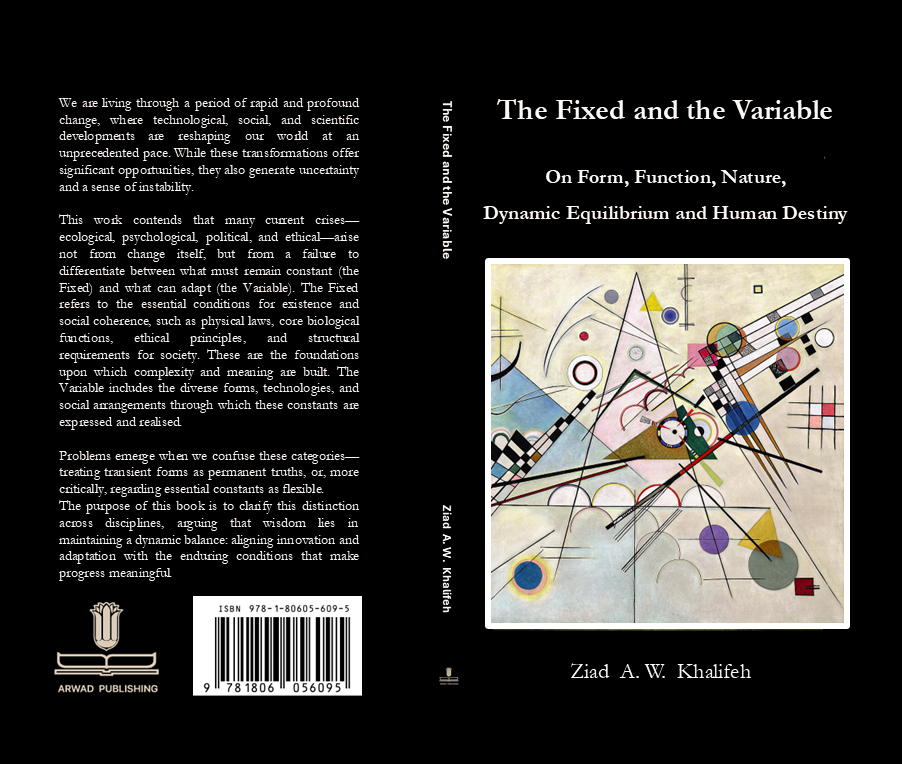
The Fixed and the Variable - English version
This book arises from a conviction that our current crises—be they ecological, psychological, political, or ethical—stem not from change itself, but from a fundamental confusion. We have lost the ability to distinguish between what must remain Fixed and what is rightly Variable.
Fixed represents the non-negotiable conditions for existence and coherence: the physical constants of the universe, the core biological functions that sustain life, the ethical imperatives of dignity and trust, and the structural necessities of any viable society. These are not antiquated traditions to be discarded, but the bedrock upon which all complexity and meaning are built. The Variable encompasses the vast realm of forms, expressions, technologies, and social configurations through which these Fixed functions are realized. Evolution, culture, and innovation operate here.
This work is an exploration across domains—from physics and biology to economics, metaphysics, and ethics—to recover this essential distinction. It argues that wisdom, both individual and civilizational, is the art of dynamic equilibrium: the continuous, conscious alignment of our variable pursuits with the fixed conditions that make those pursuits worthwhile. Freedom is not escape from constraint, but the “structured openness” to create within it. Progress is not the endless supersession of the old, but the preservation of essential functions through evolved forms.
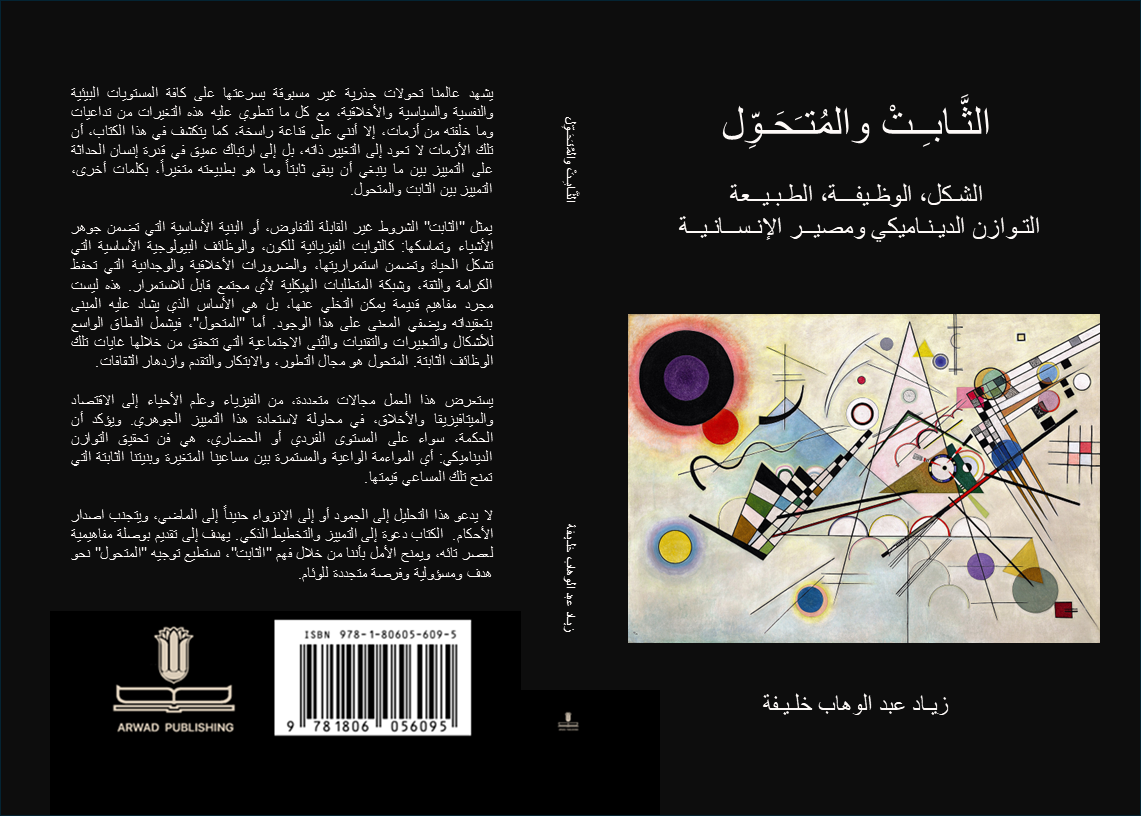
الثابت والمتحول - النسخة العربية
يشهد عالمنا تحولات جذرية غير مسبوقة بسرعتها على كافة المستويات البيئية والنفسية والسياسية والأخلاقية، مع كل ما تنطوي عليه هذه التغيرات من تداعيات وما خلفته من أزمات، إلا أنني على قناعة راسخة، كما يتكشف في هذا الكتاب، أن تلك الأزمات لا تعود إلى التغيير ذاته، بل إلى ارتباك عميق في قدرة إنسان الحداثة على التمييز بين ما ينبغي أن يبقى ثابتاً وما هو بطبيعته متغيراً، بكلمات أخرى، التمييز بين الثابت والمتحول.
يمثل "الثابت" الشروط غير القابلة للتفاوض، أو البنية الأساسية التي تضمن جوهر الأشياء وتماسكها: كالثوابت الفيزيائية للكون، والوظائف البيولوجية الأساسية التي تشكل الحياة وتضمن استمراريتها، والضرورات الأخلاقية والوجدانية التي تحفظ الكرامة والثقة، وشبكة المتطلبات الهيكلية لأي مجتمع قابل للاستمرار. هذه ليست مجرد مفاهيم قديمة يمكن التخلي عنها، بل هي الأساس الذي يشاد عليه المبنى بتعقيداته ويضفي المعنى على هذا الوجود. أما "المتحول"، فيشمل النطاق الواسع للأشكال والتعبيرات والتقنيات والبُنى الاجتماعية التي تتحقق من خلالها غايات تلك الوظائف الثابتة. المتحول هو مجال التطور، والابتكار والتقدم وازدهار الثقافات.
Click here to add text.
The Thoughton Framework
A Panentheist Philosophy of Mind, Matter, and Freedom
A Theoretical Framework for the Mind–Body Problem


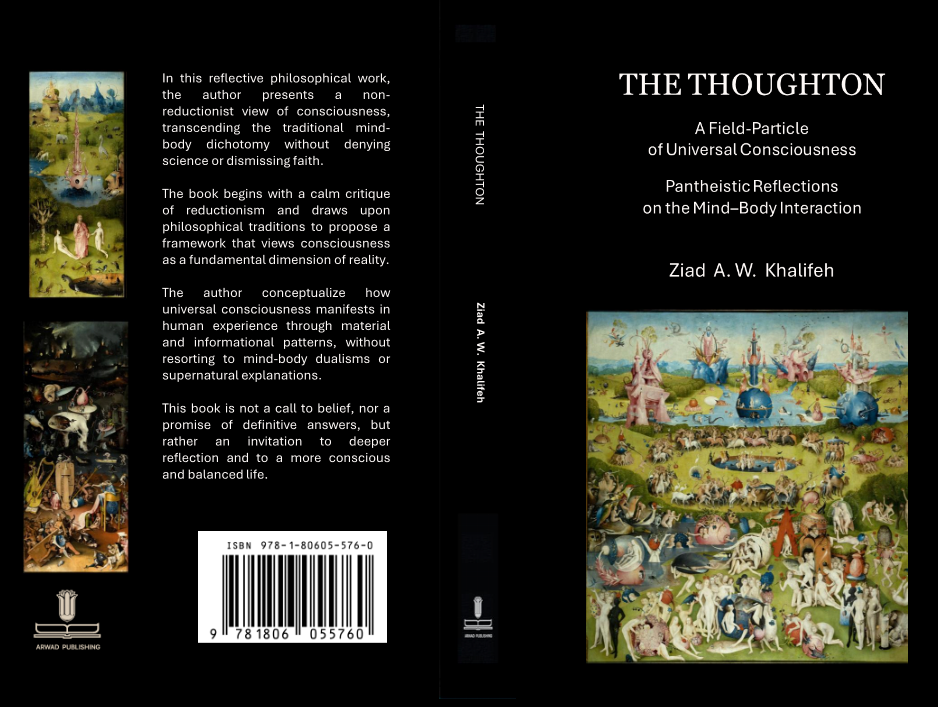
The Thoughton
Our modern world is built upon a miracle we take for granted: the transmission of experience. A voice speaks before a camera, is converted into electrical signals, modulated onto an electromagnetic carrier wave, broadcast through the air, and perfectly reconstructed in a distant screen and speaker. This process—rooted in the precise alteration (modulation) of a wave's properties like amplitude, frequency, and phase—demonstrates how abstract information (sight and sound) can be encoded into the fundamental fabric of physical reality.
This suggests that consciousness may not be a late-stage product of complex brains, but a fundamental aspect of reality itself—a field, akin to gravity or electromagnetism, that permeates existence. We will call its hypothesized fundamental unit the "Thoughton."
The Field Model: From Abstraction to Physical Reality
Why posit a new field? Because fields are the language modern physics uses to unify the abstract and the physical.
The "Consciousness Field" follows this elegant pattern. It would be a fundamental field whose intrinsic property is subjective experience or qualia. Its mathematical structure describes the space of all possible experiences. Its excitations or quanta—Thoughtons—would be the carriers of discrete units of phenomenal information.

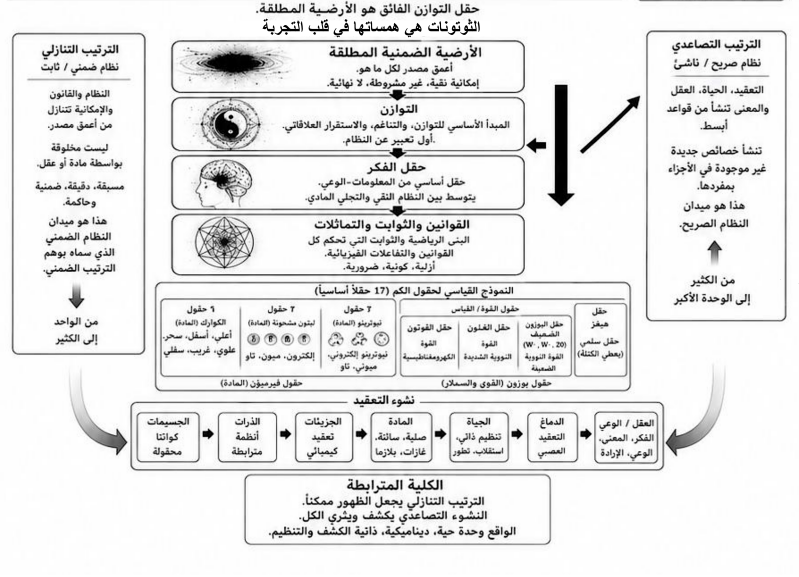
الثوتون : جسيم مجال الوعي الكوني
فرضية الثوتون: الوعي كمجال أساسي
من الموجات الكهرومغناطيسية إلى موجات العقل
يقوم عالمنا الحديث على معجزة أَلِفناها حتى باتت أمرًا مفروغًا منه: نَقل التجربة. يَتحدّث الصوت أمام الكاميرا، فيُتحوّل إلى إشارات كهربائية، ويُدمج مع موجة حاملة كهرومغناطيسية، ويُبث عبر الأثير، ثمّ يُعاد بناؤه بدقة متناهية على شاشة وسمّاعة في مكان بعيد. تُظهر هذه العملية -المتجذرة في التعديل الدقيق لخصائص الموجة كالسِّعة والتردّد والطور- كيف يمكن ترميز المعلومات المجردة (الصوت والصورة) في النسيج الأساسي للواقع المادي.
ومع ذلك، تُسلط هذه الأعجوبة التكنولوجية الضوء على لغز أعمق لم يجد له أحد حلاً بعد. إذا كانت الموجة المادية قادرة على حمل المعلومات المعقدة للفيديو، فما الذي يحمل معلومات التجربة الواعية نفسها؟ يقترح هذه الكتاب جسرًا لعبور هذه الفجوة. ويقترح أن الوعي قد لا يكون نتاجًا عَرَضياً متأخرًا لأدمغة شديدة معقدة، بل جانبًا أساسيًا (جوهر) من بنية هذا الواقع : المجال (الحقل)، شبيه بالجاذبية أو الكهرومغناطيسية، يتخلل الوجود.
نموذج المجال: من التجريد إلى الواقع المادي
لماذا نفترض مجالًا جديدًا؟ لأن المجالات هي اللغة التي تستخدمها الفيزياء الحديثة لتوحيد المجرد والمادي. لنأخذ الجاذبية مثالًا. في إطار أينشتاين، هي انحناء كيان مجرد: نسيج الزمكان. في نظرية الكم، تتوسط الجاذبية جسيمات (الجرافيتونات) في مجال الجاذبية.
وبالمثل، يُوصف المجال الكهرومغناطيسي بمعادلات ماكسويل الأنيقة - الرياضيات البحتة - ولكنه يتجلى في صورة ضوء، ورابطة كيميائية، وبنية المادة نفسها. أما المجال الكمومي فهو أكثر وضوحًا: فراغ مليء بالاحتمالات والإمكانيات "ينهار" quantum collapse إلى جسيمات منفصلة عند الملاحظة أو التفاعل.
يتبع "مجال الوعي" هذا النمط الأنيق. فهو مجالًا أساسيًا خاصيته الجوهرية هي (الكواليا (Qualia أو معاني التجربة الذاتية أو الكيفيات الحسيّة.

The Masks of Delusion
Reflections at the Edge of Reality
A Compilation of “The Masks of Illusion," is not merely a book, but an intellectual journey that tarverses science, philosophy, metaphysics, and future technologies, revealing that the intertwined crises of our time are but different facets of a single flaw: the disregard for the law of balance, which has caused all forms of social, psychological, technological, economic, and environmental collapse. In precise and coherent language, the author unravels the deep structure of contemporary reality, explaining how the world is collapsing not because of weakness, but because its masks can no longer conceal the exhaustion and internal burnout of the global system.
The book traces the cracks in modernity from five angles: the illusion of controlling nature, the illusion of unlimited progress, the illusion of fixed identity, the illusion of absolute rationality, and the illusion of permanent stability. As these illusions are exposed, humanity is confronted with the truth it has ignored for centuries: that survival is not dependent on strength or intelligence, but on the two pillars of balance—balance in the mind, in society, in the economy, and in our relationship with the life-giving planet.
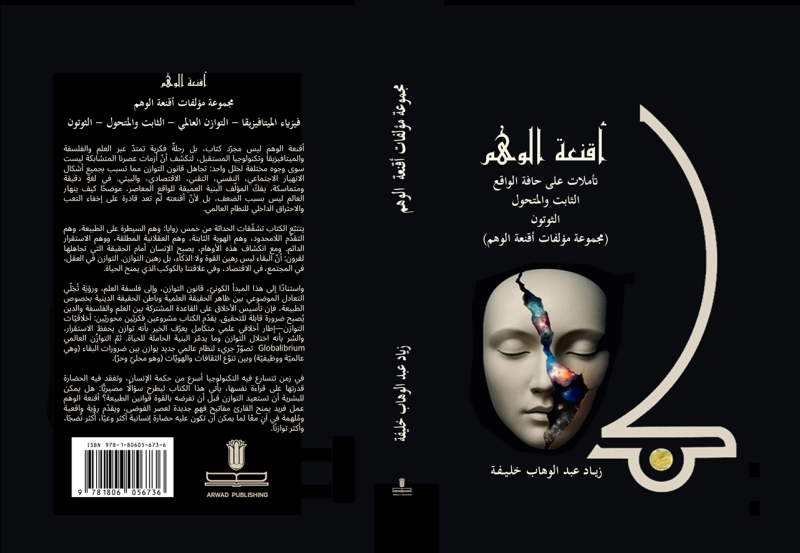
أقنعة الوهم
تأملات على حافة الواقع
أقنعة الوهم ليس مجرّد كتاب، بل رحلةً فكرية تمتدّ عبر العلم والفلسفة
والميتافيزيقاً وتكنولوجيا المستقبل، لتكشف أنّ أزمات عصرنا المتشابكة ليست
سوى وجوه مختلفة لخلل واحد: تجاهل قانون التوازن مما تسبب بجميع أشكال
الانهيار الاجتماعي، النفسي، التقني، الاقتصادي، والبيئي. في لغةٍ دقيقة
ومتماسكة، يفكّ المؤلف البنية العميقة للواقع المعاصر، موضحًا كيف ينهار
العالم ليس بسبب الضعف، بل لأنّ أقنعته لم تعد قادرة على إخفاء التعب
والاحتراق الداخلي للنظام العالمي.
يتتبّع الكتاب تشقّقات الحداثة من خمس زوايا: وهم السيطرة على الطبيعة، وهم
التقدّم اللامحدود، وهم الهوية الثابتة، وهم العقلانية المطلقة، ووهم الاستقرار
الدائم. ومع انكشاف هذه الأوهام، يصبح الإنسان أمام الحقيقة التي تجاهلها
لقرون: أنّ البقاء ليس رهين القوة ولا الذكاء، بل رهين التوازن. التوازن في العقل،
في المجتمع، في الاقتصاد، وفي علاقتنا بالكوكب الذي يمنح الحياة.
واستنادًا إلى هذا المبدأ الكونيّ، قانون التوازن، وإلى فلسفة العلم، ورؤيَة تُجَلّي
التعادل الموضوعي بين ظاهر الحقيقة العلمية وباطن الحقيقة الدينية بخصوص
الطبيعة، فإن تأسيس الأخلاق على القاعدة المشتركة بين العلم والفلسفة والدين
يُصبح ضرورة قابلة للتحقيق. يقدّم الكتاب مشروعين فكريّين محوريّين: أخلاقيّات
التوازن إطار أخلاقي علمي متكامل يعرّف الخير بأنه توازن يحفظ الاستقرار،
والشر بأنه اختلال التوازن وما يدمّر البنية الحاملة للحياة. ثمّ التوازّن العالمي
Globalibrium تصوّرٌ جريء لنظام عالمي جديد يوازن بين ضرورات البقاء (وهي
عالميّة ووظيفيّة) وبين تنوّع الثقافات والهويّات (وهو محليّ وحدّ).
في زمن تتسارع فيه التكنولوجيا أسرع من حكمة الإنسان، وتفقد فيه الحضارة
قدرتها على قراءة نفسها، يأتي هذا الكتاب ليطرح سؤالا مصيريًّا: هل يمكن
للبشرية أن تستعيد التوازن قبل أن تفرضه بالقوة قوانين الطبيعة؟ أقنعة الوهم
عمل فريد يمنح القارئ مفاتيح فهم جديدة لعصر الفوضى، ويقدّم رؤِية واقعية
ومُلهمة في آنٍ معًا لما يمكن أن تكون عليه حضارة إنسانية أكثر وعيًّا، أكثر نُضجًا،
وأكثر توازنا.

جَدَليَّة السَّرْمَديَّة والخَلْق وشمُولية الوَعْي في الفَضَاء القُرآني
نحو قراءة أنطولوجية في "وحدة الوجود اللاحلولية" وبدون الإختزالية
يقدّم هذا الكتاب مقاربة أنطولوجية متعددة المستويات لمسائل الخلق والوعي والزمن والحرية في ضوء النص القرآني، مع استحضار نقدي للتراث الكلامي والصوفي والفلسفي الإسلامي، ومقارنة معمّقة مع اتجاهات الفلسفة الحديثة وعلوم الوعي المعاصرة. ينطلق العمل من فرضية أن لغة القرآن لا تختزل في المجاز البلاغي، بل تكشف عن رؤية كونية متكاملة ترى الوجود فعلًا متجددًا ذا معنى، والوعي خاصية وجودية متدرجة لا تنحصر في الإنسان وحده.
يناقش الكتاب إشكالات مركزية مثل: مفهوم الخلق خارج ثنائية العدم والمادة، شمولية الوعي في الموجودات، العلاقة بين الأزلي والزمني في قضية خلق القرآن، التمييز بين وحدة الوجود والحلول، وحدود التفسير المادي للاوعي والإرادة الحرة. ويقترح إطارًا تركيبيًا يرى أن الكون قائم بالله دون أن يذوب فيه، وأن الزمن إطار إدراكي للتجلي لا قيدًا على السرمدية، وأن الحرية الإنسانية تتحقق داخل بنية سببية مفتوحة وموجهة بالمعنى.
لا يسعى هذا العمل إلى تأسيس نظرية علمية بديلة ولا إلى إعادة إنتاج مذهب كلامي، بل إلى بلورة أفق فلسفي جديد للحوار بين النص الديني والعقل الفلسفي والعلم المعاصر، بما يعيد الاعتبار للأسئلة الوجودية الكبرى حول المعنى والمسؤولية والوعي. ويقدّم الكتاب بذلك مساهمة في دراسات الفلسفة الدينية، وفلسفة الوعي، والهرمنيوطيقا القرآنية، بوصفه مشروعًا نقديًا تركيبيًا يربط بين الخلق بوصفه فعلًا دائمًا، والوعي بوصفه علاقة كونية، والإنسان بوصفه شاهدًا أخلاقيًا داخل كون مشحون بالدلالة.
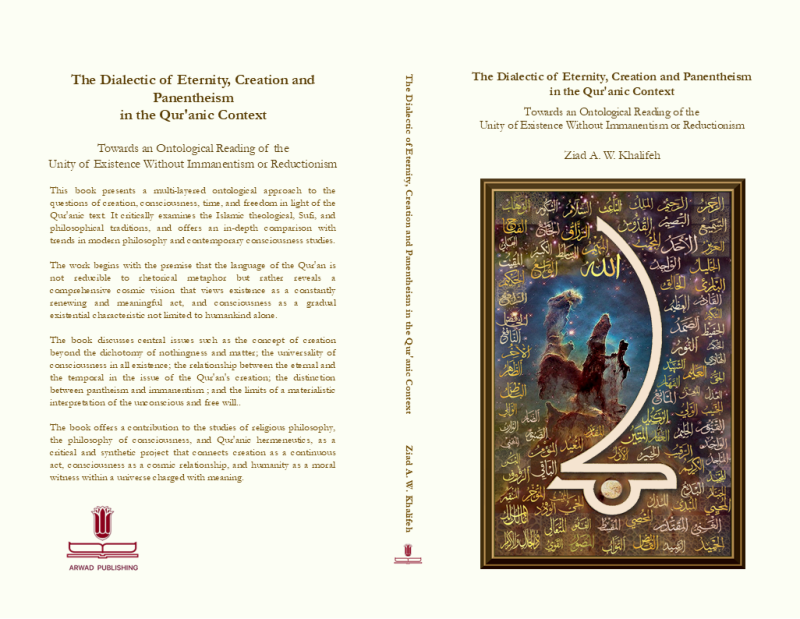
The Dialectic of Eternity, Creation and Panentheism in the Qur'anic Context
Towards an Ontological Reading of the Unity of Existence Without Immanentism or Reductionism
This book is based on a multi-layered ontological cycle exploring the questions of creation, consciousness, time, and free will in light of the Qur'anic text. It critically examines the Islamic theological, Sufi, and philosophical heritage, and offers a comprehensive comparison with contemporary philosophical and consciousness-science trends. The work begins with the premise that the language of the Qur'an is not merely rhetorical metaphor, but rather a mirror reflecting a cosmic vision that focuses on existence as a constantly renewed and meaningful force, and on consciousness as a hierarchical quality not limited to humankind alone.
The book discusses central issues such as: the concept of creation between nothingness and matter; the comprehensiveness of consciousness in all existence; the conflict between the eternal and the temporal in the question of the Qur'an's creation; the distinction between pantheism and Immanentism ; and the limits of a materialist interpretation of the unconscious and free will. It proposes a synthetic framework that posits the universe as existing through God without being dissolved by Him, that time is a framework perceived for manifestation and cannot be applied to eternity, and that human freedom is realized within an open and meaning-oriented causality.
This work is not intended to challenge an alternative theory or reproduce a theological doctrine, but rather to crystallize a new philosophical horizon for dialogue between text, philosophical reason, and contemporary science, thereby reconsidering the major existential questions of essence, responsibility, and consciousness. The book complements his contributions to studies in religious philosophy, the philosophy of consciousness, and Qur'anic hermeneutics, distinguished by a critical and synthetic project that links creation as an ever-present distinction, consciousness as a distinction within a cosmic relationship, and humanity as a distinct and independent entity within a universe charged with meaning.